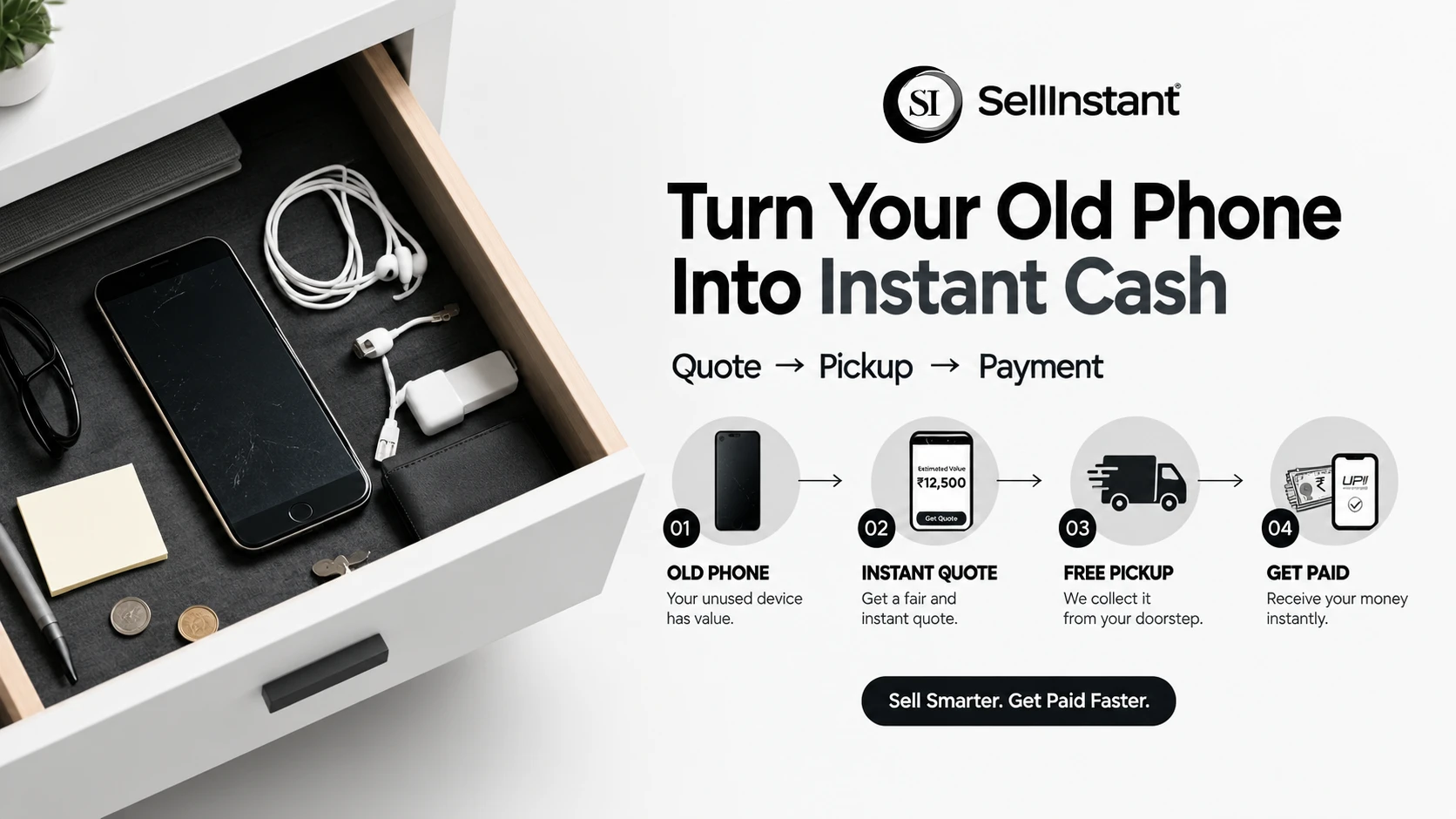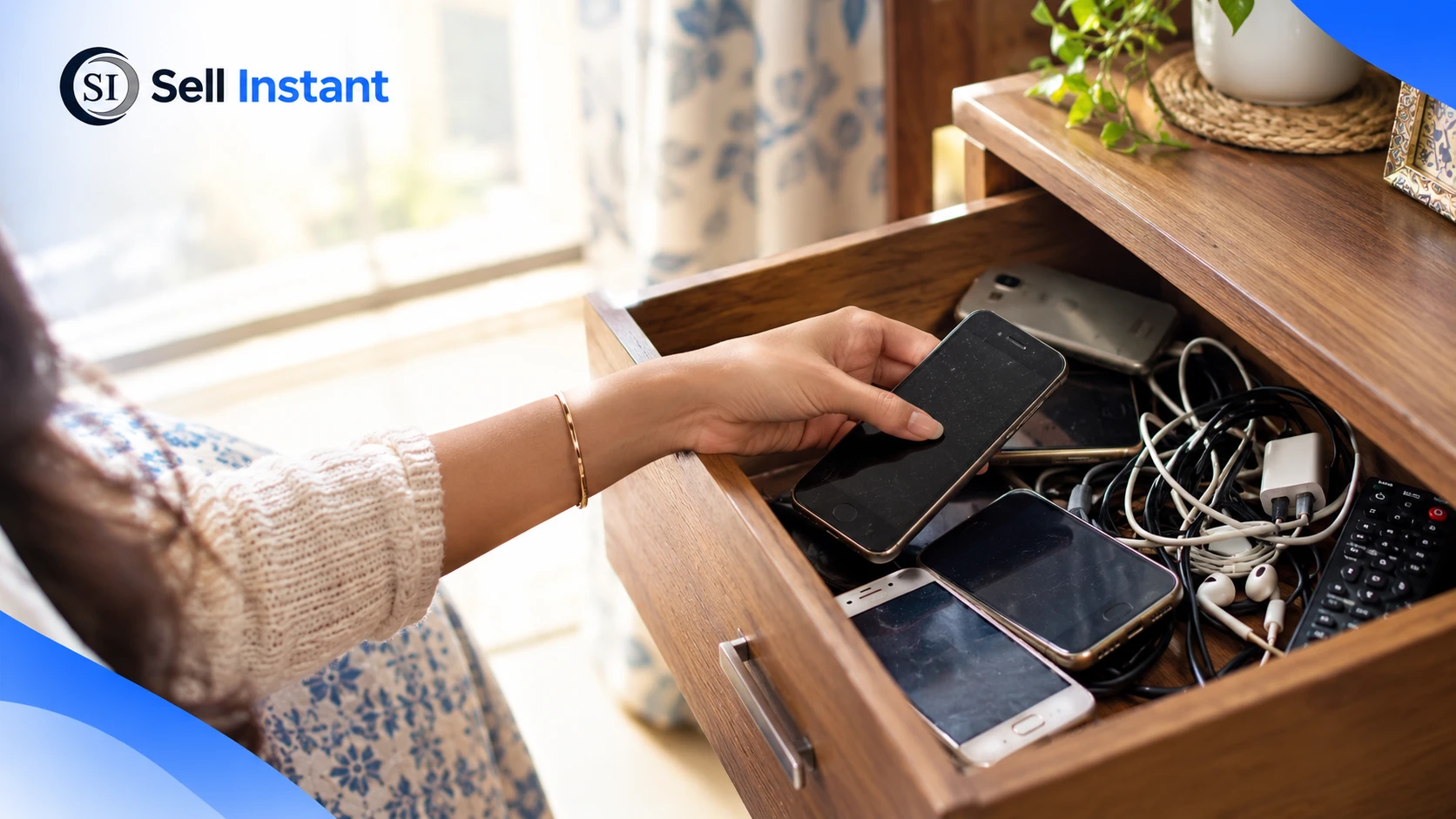

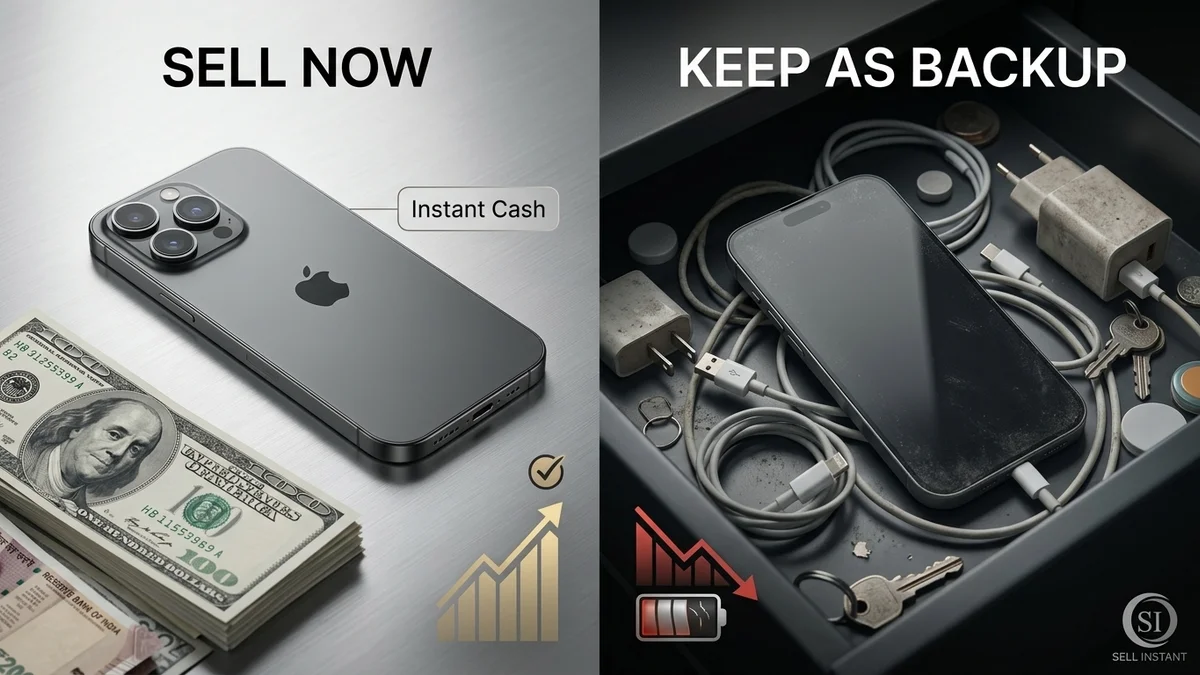
Nikhil kept his old phone "just in case" for two years. It lived in a drawer next to a bundle of tangled cables and a calculator that hadn't worked since college. When his new phone's screen finally cracked, he dug out the backup, pressed the power button, and watched it do absolutely nothing. The battery had died completely. When he finally tried to sell it, the offer was barely half of what he'd have got when he upgraded.
So, selling your phone vs. keeping it as a backup: which actually pays off? It depends on your situation, but the numbers lean one way more often than people expect. Let's work through it honestly.
Why "Just in Case" Feels So Safe
Keeping a spare phone feels sensible. Phones break, get stolen, and fail at the worst moments. Having a fallback sounds like cheap insurance.
There's also plain emotion. Your old phone holds memories, and selling it can feel oddly like giving away a small piece of your life. And let's be real: sometimes we just can't be bothered with the hassle of wiping and listing it.
All fair reasons. But "just in case" has a hidden price tag, and it's worth looking at.
The Hidden Cost of Keeping a Backup Phone
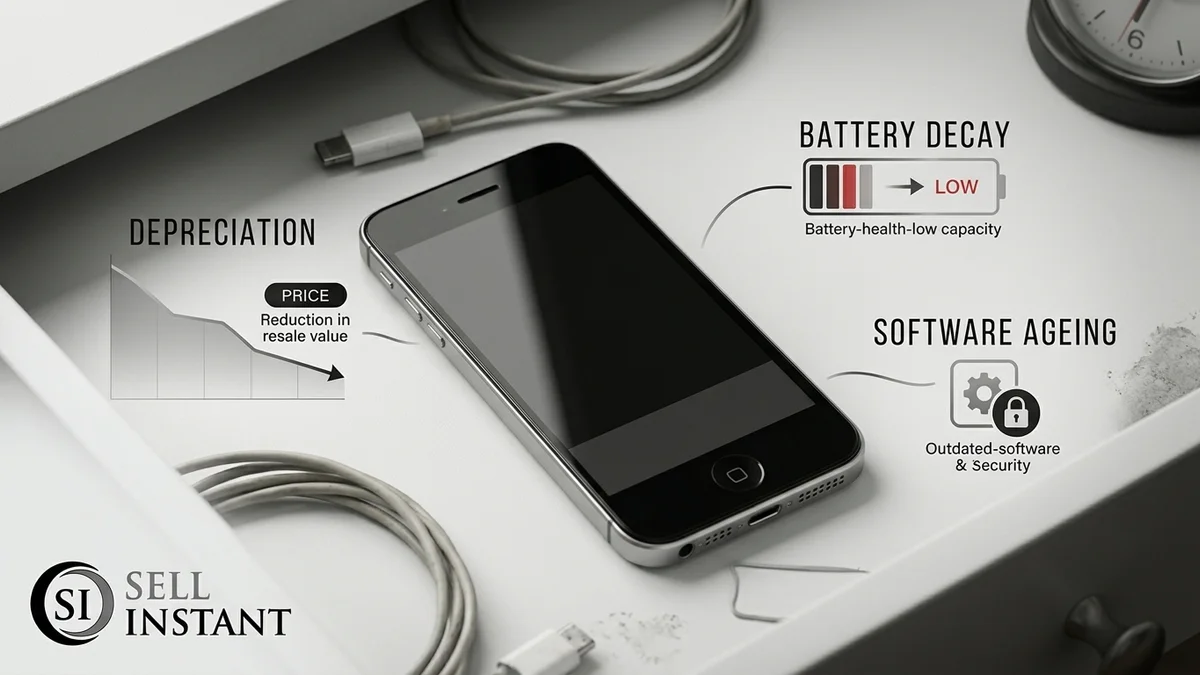
A backup phone isn't free. It quietly costs you in three ways:
- Depreciation: Used phones lose value over time, and they drop in steps when new models launch. Every month in the drawer is money slipping away.
- Battery decay: Lithium-ion batteries degrade even when unused, and a phone left at zero percent can fall into a deep discharge and refuse to switch on.
- Software ageing: Older phones stop receiving updates, which means weaker security and apps that eventually stop working.
Think of it like keeping a carton of milk "for emergencies." It looks fine on the shelf, but the clock is ticking whether you watch it or not.
Selling Your Phone vs. Keeping It as a Backup: The Money Math
Here's a simple way to compare, without any guesswork:
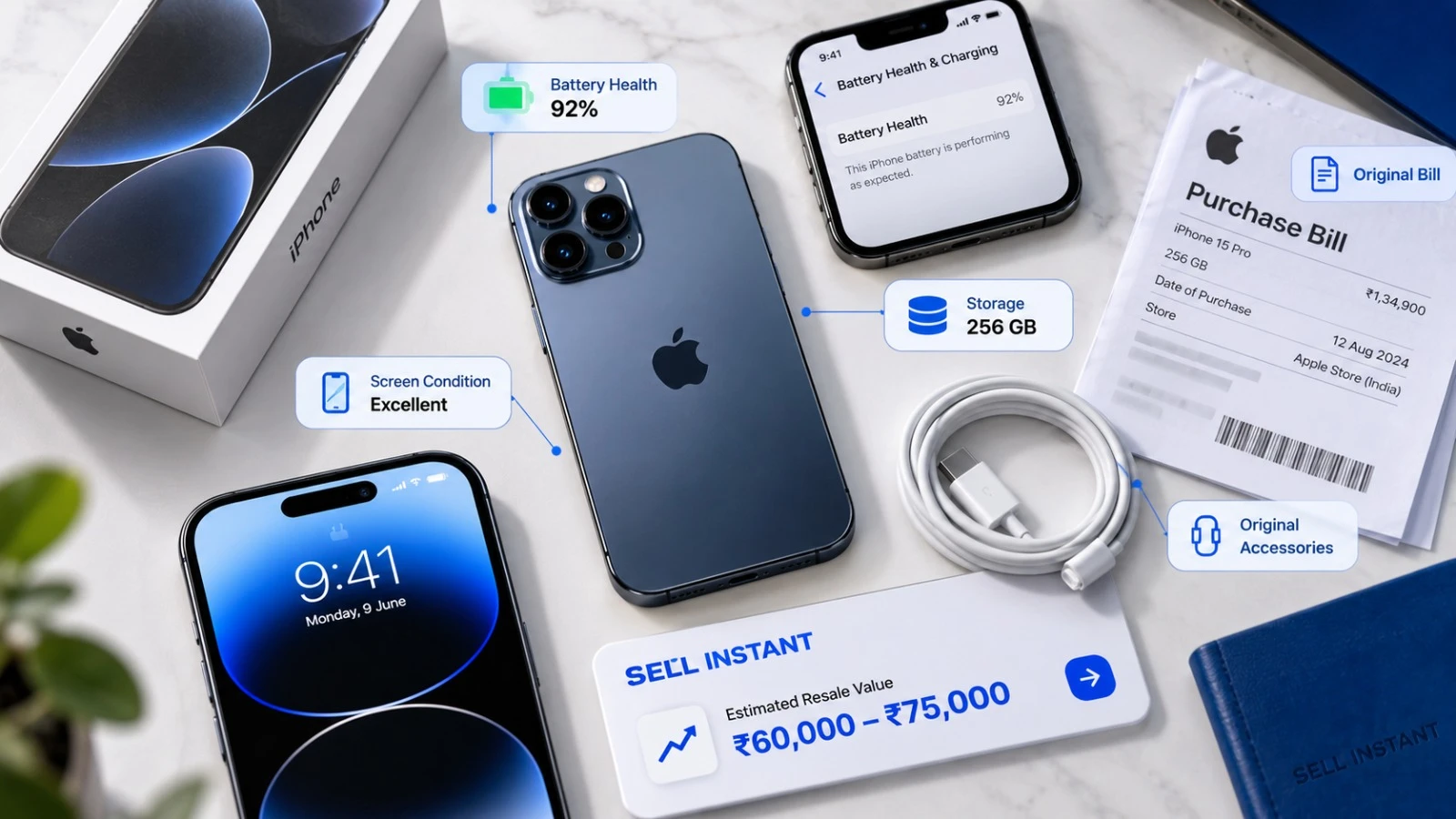
- Get a quote today. Use an instant-quote service for your exact model, storage, and condition.
- Estimate your backup cost. Check what a cheap, basic phone costs. Many budget models cost less than the gap between your old phone's value and nothing.
- Compare. If the sale price covers a decent budget backup (or most of it), selling usually wins.
- Factor in timing. If a new launch or festive sale is close, your old phone's value may be about to dip.
### Comparison: Selling Your Phone vs. Keeping It as a Backup
| Evaluation Factor | Selling Old Phone (Sell Instant) | Keeping as Backup in Drawer |
|---|---|---|
| Cash Value | Immediate lump-sum cash or UPI payment | ₹0 cash locked up in a drawer |
| Resale Value Over Time | Maximum value captured today | Drops 15%–30% yearly; steep drop after launches |
| Battery & Hardware Health | Sold while fully operational | High risk of deep discharge failure & swelling |
| Software & App Security | Replaced with modern updated device | Deprecated OS, no security patches, banking apps fail |
| Emergency Reliability | 100% reliable backup if budget phone bought | Unpredictable (often dead or uncharged when needed) |
| Best For | Smart upgraders who want cash & reliability | Frequent remote travellers or dual-SIM users |
A friend of mine, Sneha, ran this test. Her old phone fetched enough to buy a simple budget phone for emergencies, with money left over. She now has a backup that's actually reliable and a little extra cash. Not a bad swap.
When Keeping a Backup Phone Genuinely Makes Sense
I'm not here to tell you to sell everything. There are good reasons to keep a spare:
- You travel often or work remotely: A dead phone can mean a missed flight or a lost client.
- Your phone is your lifeline: For people who rely on it for banking, work calls, or medical alerts, a backup matters.
- The old phone has low resale value anyway: If it's very old, heavily damaged, or worth very little, keeping it costs you almost nothing.
- You need a second number or device: A dedicated work phone or secondary SIM device is a real use.
- You're waiting on a repair: Selling the old phone before your main phone is back from the shop is risky.
If you do keep it, treat it properly: charge it to around 50%, store it somewhere cool and dry, and power it on every couple of months. Otherwise it's just a nicely shaped paperweight.
Selling Your Phone vs. Keeping It as a Backup: The Middle Path
You don't have to choose between extremes. There's a smart third option.
### Sell the old one, buy a budget backup
A basic phone with a fresh battery and current software is more reliable than a three-year-old flagship that's been sleeping in a drawer. You get dependable cover and cash in hand.
### Keep it for a short, fixed period
Give yourself a deadline, say 30 days after upgrading. If the new phone behaves, sell the old one before the next launch pushes its value down.
### Use a tablet or old laptop as a fallback
Many everyday tasks, like messaging, banking apps, and calls over Wi-Fi, work on other devices. For some people, that's backup enough.
How to Sell Smart if You Decide to Let Go
If the math says sell, a bit of prep protects both your data and your payout:
- Back up everything: Copy all files to the cloud or a computer, then open the backup and check it. (Our guide on things to do before handing over your old phone walks through the full process.)
- Sign out of accounts: Disconnect your Apple ID or Google account and turn off Find My Device.
- Factory reset the phone: Run a full reset and confirm it shows the "Hello" or initial setup screen. (Learn how to safely wipe your phone before selling).
- Remove your SIM and memory card: Eject the physical tray and deactivate any eSIM profiles.
- Be honest about condition: Disclose marks accurately and take clear photos in good lighting.
- Compare offers & verify payment: Check instant buyback rates versus other options, and always verify payment directly in your own banking app before handing over the device.
When you're ready for a quick, fair number, you can check what your phone is worth on our sell your phone page.
Frequently Asked Questions (FAQs)
Frequently Asked Questions (FAQs)
For most people, selling pays off more, since old phones lose value and spare phones often fail when needed. Heavy travellers and people who depend on their phone may still prefer a spare.
Yes. Used phones depreciate with age and new launches, whether they're in use or sitting in a drawer.
Charge it to about 50%, keep it somewhere cool and dry, and switch it on every few months to keep the battery healthy.
You can use it over Wi-Fi for many apps, but calls and OTP messages will need a SIM or another connection.
Selling your old phone and putting part of the money toward a simple budget model is often the most reliable option.
Final Thoughts
So, selling your phone vs. keeping it as a backup: which actually pays off? For most people, selling wins, because the value fades and the "backup" often isn't dependable by the time you need it. If your work or lifestyle truly demands a spare, keep it properly maintained or swap it for a budget model. Either way, decide on purpose rather than by drawer default. Nikhil's backup taught him that the hard way.
Ready to see what your old phone could earn? Get your instant quote on Sell Instant with free doorstep pickup and instant payment on the spot. Have other devices to trade in? You can also sell your old laptop or sell your iPad or tablet. Have questions first? Contact our team or read more guides on our blog.
Upgrading or Selling Your Sell Old Mobile?
Get an instant guaranteed valuation online in 60 seconds with 100% free doorstep pickup and immediate UPI payment across India.