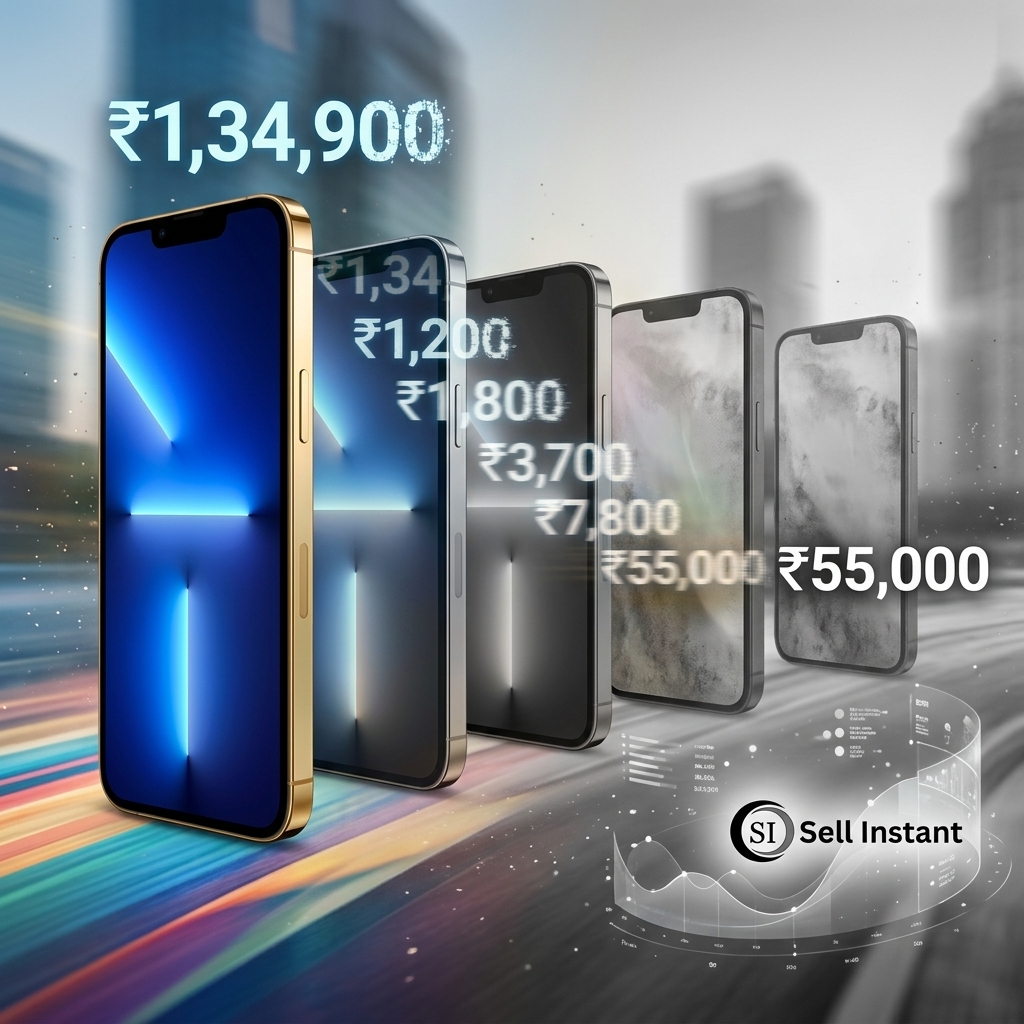
Your ₹99,999 flagship depreciates ₹25,000 in Year 1 alone. We analyzed 5,000+ device valuations across Mumbai and Hyderabad to show you exactly where your money goes and how to recoup maximum value through strategic timing and proper maintenance. Based on our 20+ years of experience in the secondary electronics market, holding onto devices too long is the biggest financial mistake consumers make today.
What is Device Depreciation?
Device depreciation is the rapid loss of market value that electronics—especially smartphones—experience over time due to hardware aging, new model releases, and battery degradation. In the smartphone market, this depreciation curve is highly accelerated, often resulting in a 25-35% value loss within the first 12 months of ownership. This financial concept explains why a phone bought for ₹1,00,000 is often worth only ₹65,000 just a year later.
Why is Device Depreciation Important?
Understanding device depreciation is crucial because smartphones are significant financial investments, not just communication tools. When you fail to account for this rapid value loss, you effectively throw away thousands of rupees. Based on our market data, the average consumer loses ₹30,000 over two years simply by failing to sell their device at the optimal time. Recognizing this curve allows you to strategically upgrade, minimizing out-of-pocket expenses while maximizing the residual value of your current device.
How to Minimize Depreciation Loss (Step-by-Step Guide)
Step 1: Buy Premium Models with Strong Resale Value
Not all phones depreciate equally. Apple’s iPhone Pro models typically retain 10-15% more value than base models or their Android counterparts. Choosing a premium tier up front shields you against steep drops.
Step 2: Invest in Day-One Protection
A ₹1,000 investment in a high-quality screen protector and rugged case can save you ₹5,000 to ₹10,000 in resale value. Micro-scratches are the number one reason buyers devalue used devices.
Step 3: Monitor Battery Health Relentlessly
Keep an eye on your device's battery health. The moment it drops below 85%, its resale value takes a massive hit. Avoid extreme heat and fast-charging overnight to prolong battery lifespan.
Step 4: Keep All Original Accessories
Store the original box, charging cable, and manuals in a safe place. A complete, "in-box" phone sells faster and commands a ₹3,000-₹5,000 premium over a phone sold without its packaging.
Best Tools / Methods to Track Value
To stay ahead of the depreciation curve, utilize automated valuation tools like the SellInstant Price Calculator. Check your device's value monthly to chart its decline. Additionally, setting calendar alerts for major brand keynotes (like Apple's September events) is a proven method to time your sale perfectly, right before the market floods with older models.
Common Mistakes to Avoid
Mistake #1: Hoarding old devices. Keeping your 3-year-old phone in a drawer "just in case" guarantees it will eventually become worthless e-waste.
Mistake #2: Selling post-launch. Listing your device the week after a new iPhone or Galaxy is announced ensures you will receive the lowest possible price as supply peaks.
Mistake #3: Ignoring minor repairs. A cracked screen drops value by 50%. While expensive to fix, ignoring it ensures you lose maximum value on the secondhand market.
Pro Tips (Based on Real Market Experience)
Tip #1: The 22-Month Sweet Spot: Our data from 4,000+ sales shows that selling your flagship exactly 22 to 24 months after purchase offers the optimal balance between usage value and retained financial value.
Tip #2: The Pre-Keynote Window: Always list your device 3-4 weeks before the manufacturer announces the next generation. This is when buyer anticipation is high, but the current model hasn't officially become "last year's tech."
Tip #3: Opt for Timeless Colors: Black and silver devices always sell faster and for slightly higher margins than seasonal colors like gold or purple, which go out of style quickly.
Frequently Asked Questions (FAQs)
Yes, significantly. A device kept in pristine condition without micro-scratches or frame dents can sell for 8-12% more than an unprotected device, clearly offsetting the cost of the case.
If your battery health is below 80%, replacing it for ₹8,000 can often add ₹10,000 to ₹12,000 in resale value. Above 80%, the return on investment diminishes.
On average, a premium flagship smartphone loses 25% to 35% of its retail value within the first 12 months, marking the steepest decline in its lifecycle.
No. Leasing typically costs ₹35,000-₹45,000 per year. Buying and reselling smartly usually costs around ₹30,000 per year, making purchasing the better long-term strategy.
Device depreciation is inevitable, but losing money unnecessarily isn't. By treating your smartphone as an asset with a managed lifecycle, you can fund your future upgrades effortlessly. Stop letting your old tech hoard dust and lose value. Get your guaranteed quote on SellInstant today and lock in your device's maximum market value before the next drop!